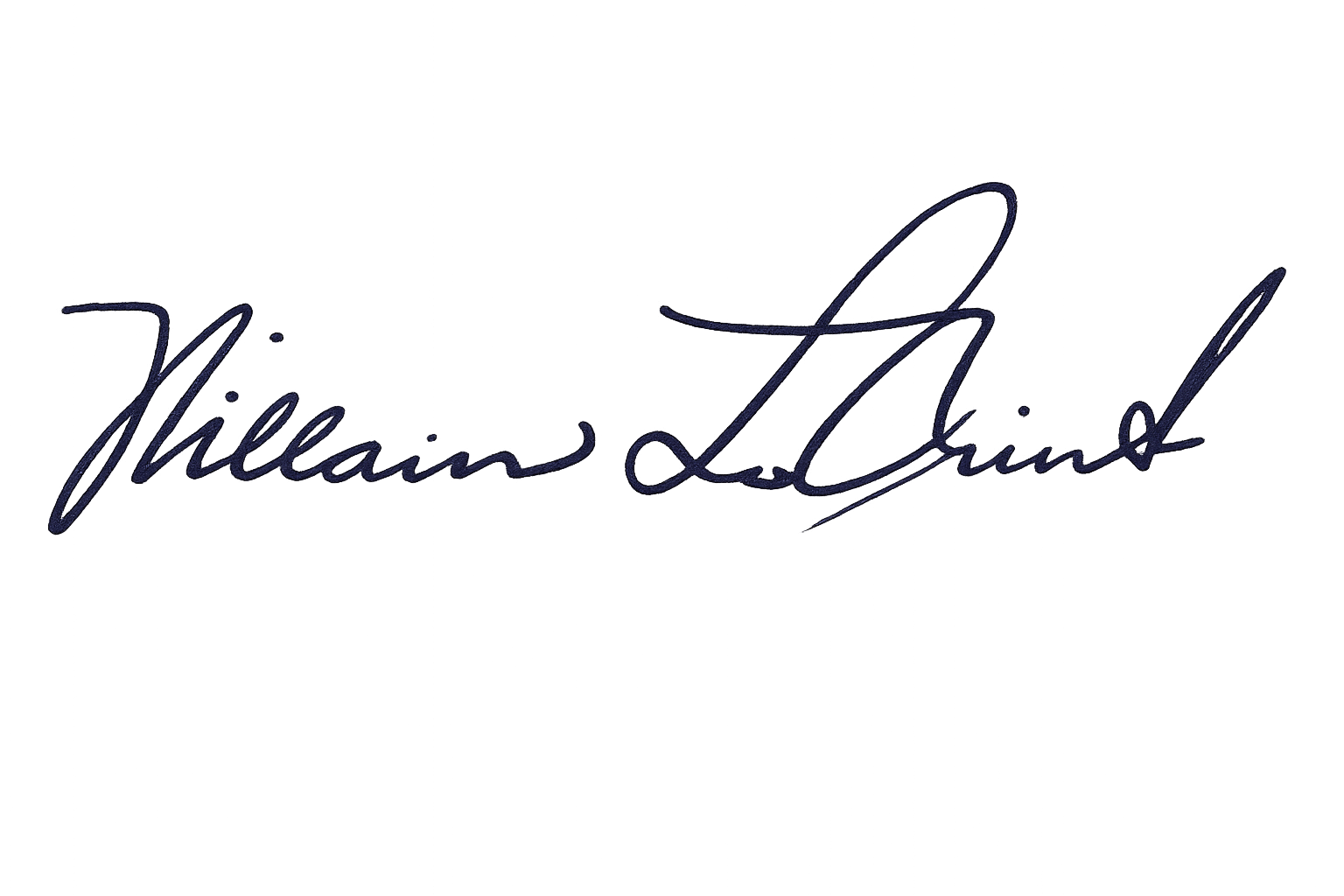
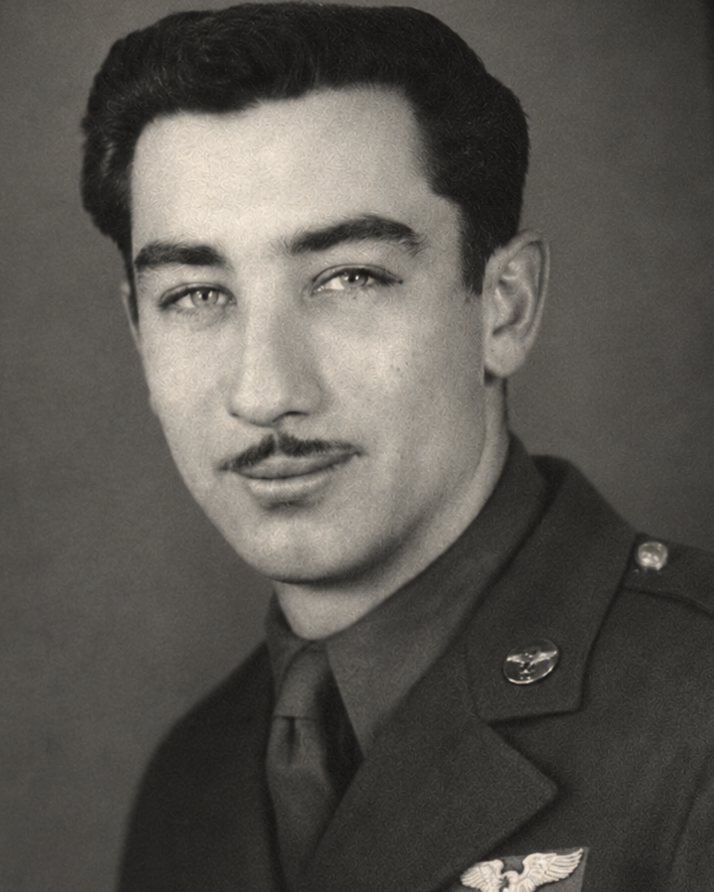
William L. Orient, Technical Sergeant, serial number 13111662, served as a radio operator with the 328th Bomb Squadron of the 93rd Bombardment Group (Heavy) — the pioneering B-24 Liberator unit of the U.S. Eighth Army Air Force, operating from Station 104 at Hardwick, Norfolk. A native of Bridgeville, Pennsylvania, he enlisted in April 1942 and ultimately flew 34 combat missions, accumulating more than 200 combat hours. He was one of the most seasoned enlisted airmen in his squadron, voluntarily extending his tour well past the mandatory threshold to remain close to his brother Joe, who was still fighting with the U.S. Army infantry in France.
Orient came to the 93rd the long way. He entered the Army Air Forces hoping to become a pilot, but during primary flight training in a PT-13 biplane, a personality clash with his instructor ended badly — a botched landing in which they hit the ground and clipped a wingtip washed him out of the program. He later concluded he was better suited to the crew than the cockpit. Retrained as a radio operator, he received his B-24 assignment at Davis-Monthan Army Air Field in Tucson, Arizona, where Crew 4436 formed on June 7, 1944. The crew trained under pilot Lt. William McCabe ("Mac"), co-pilot Frank Cepl, navigator Jerry Farnum, bombardier Philip Phillips, and engineer Paul Harwood, alongside gunners Lawrence Miller, Kenneth Holt, Lawrence Coffman, and Henry Bratyanski.
It was in Tucson that Orient met Phyllis — the woman he would marry — just six weeks before the crew shipped out to England. He wrote to her throughout his deployment in letters he could not fill with specifics about his location or assignments, but which traced the arc of his emotional life overseas. He worried about his three brothers and a brother-in-law all serving simultaneously, grieved the loss of his cousin Andy in Italy, and found comfort in small things: a bicycle he called his "wheel," a bush mustache grown to cushion his face against the oxygen mask, and the Friday afternoon parties his barracks crew organized back at Hardwick with parachute bags full of cognac liberated from Antwerp.
Crew 4436 flew their first combat mission on August 1, 1944, bombing Le Bourget Aerodrome near Paris through rough, accurate flak. Three more missions followed in the next four days — a railroad bridge at Montereau, a synthetic ammonia plant at Harnes, and the Heinkel bomber assembly plant at Rostock. On August 5, returning from the aircraft works at Fallersleben near Brunswick, their B-24 absorbed 62 flak hits and lost hydraulics. Orient's crew put down at RAF Woodridge, a five-mile emergency landing strip, dragging the plane's tail on the pavement to stop. The aircraft was repaired and back in the air within weeks — Orient later cited it as evidence of the extraordinary dedication of the ground crews who worked nights by spotlight, changing engines on scaffolds.
The mission of August 8, 1944 — targeting Villacoublay Aerodrome southwest of Paris — became the defining episode of the crew's early service. Under relentless and accurate flak, pilot McCabe took a hit in his hand and began spraying blood. As radio operator, Orient had freedom to move around the flight deck, and he reacted immediately: he reached across the cockpit, lifted McCabe bodily over the control panel, and laid him on the floor. Co-pilot Cepl called bombardier Phillips forward and a tourniquet was applied. Approaching Hardwick on fumes with a wounded pilot aboard, Cepl called for a fly-through landing, shooting red flares so medics could find them on the runway. When Mac was removed from the aircraft, the crew found he had also been wounded in the back. Ground crews later recovered a chunk of flak from inside Orient's radio receiver that would have struck him in the head had he been in his usual seated position.
After McCabe's hospitalization, Crew 4436 flew with Lt. James H. Cook before co-pilot Frank Cepl assumed the pilot's seat. Through late summer the group was pulled off bombing to ferry fuel in 55-gallon drums to General Patton's Third Army at Orleans — the tanks were running dry. When Orient reached 25 missions the Army Air Forces raised the threshold to 30; when he reached 30, they raised it to 35. Most of his original crew went home around their 28th mission. Orient stayed on, assigned as a squadron radio operator flying with whatever crew needed him. His reasons were personal as much as professional: his brother Joe was still in the infantry in France, and staying in the air kept him, in some way, in that fight.
On October 7, 1944, Cook's final mission sent the group to the Magdeburg oil refinery — an installation Orient would visit six times in all. Assigned a brand-new aircraft and a theoretically safe formation position, they were badly mauled by flak and ran out of airspeed and altitude before reaching Brussels. They put down on a captured Luftwaffe field near Antwerp, rolling through cow pastures to stop. A Belgian civilian appeared quickly, warned them Germans were still in the area, and drove the crew into the liberated city. They spent three days at the fine Century Hotel with almost nothing to eat or drink. A Polish RAF squadron offered boiled cabbage and rum; Orient poured the rum into his cigarette lighter and called it the hottest lighter in the squadron. The crew left with parachute bags full of French cognac, which they organized into Friday afternoon parties back at Hardwick.
The mission of January 8, 1945 came closest to ending everything. Launched in near-zero visibility with orders to form over the Bay of Biscay, they were caught in violent thermals that threw the B-24 inverted and spinning. Orient jettisoned the bombs, hit the throttles, and deployed the flaps — but Cepl had gone deep into vertigo. Orient struck him on the shoulder. No response. He wound up for a second blow, ready to haul him from the seat. The second hit brought Cepl back; they pulled out at 1,500 feet with the rear fuselage twisted 45 degrees and the upper stabilizer knocked askew. They put down at Woodridge again. The RAF offered rum. Orient went through the line twice. Back at Hardwick, Cepl climbed off the truck flat on his back, declared he was finished with B-24s, and kept his word — he went home by boat.
Orient flew his remaining missions with borrowed crews — Severson's, Smith's, Holt's — primarily against Magdeburg's synthetic oil plant, which the Germans kept rebuilding as fast as the Allies bombed it. On his final mission, March 3, 1945, he flew as nose gunner with Holt's crew, the third plane to lead the group. They dove to 10,000 feet over Magdeburg; six German jets made passes and put six holes in the plane. He recorded it in his memoir, "Lest We Forget," written in the 1960s: "I quit combat flying at 34 missions — so I could stay with the group." He flew home with the 93rd on a 30-day rest leave, then was sent to Pyote, Texas for B-29 training before the atomic bombs ended the war.
After discharge at Fort Bliss, Texas, Orient boarded a bus overnight to Tucson. He arrived September 13, 1945 — and spent the day waiting. He refused to propose until the 14th. On bended knee, he asked Phyllis to marry him; her only question was "when." They married September 24, 1945 at All Saints Church in Tucson, Father Gramer officiating. They had five daughters and built their lives there; Orient worked as a general contractor for 40 years. He documented his service in "Lest We Forget" and in an oral history recorded by his grandson Jon Edmiston in 2001. He remained grateful throughout his life for the ground crews, the bonds formed under fire, and the strange grace of having survived things he had no right to survive. His marriage to Phyllis lasted 66 years. William L. Orient died on April 29, 2011 — his 90th birthday.
From the 2nd Air Division Association Yearbook
Assigned to 93rd Bomb Group in England as radio operator/gunner on a B-24. After going through three pilots and "walking home" four times, his crew was broken up at 28 missions. He finished the next six as extra crew and replacements, completing 34 total missions.