Personal File · AirmanCompleted Tour

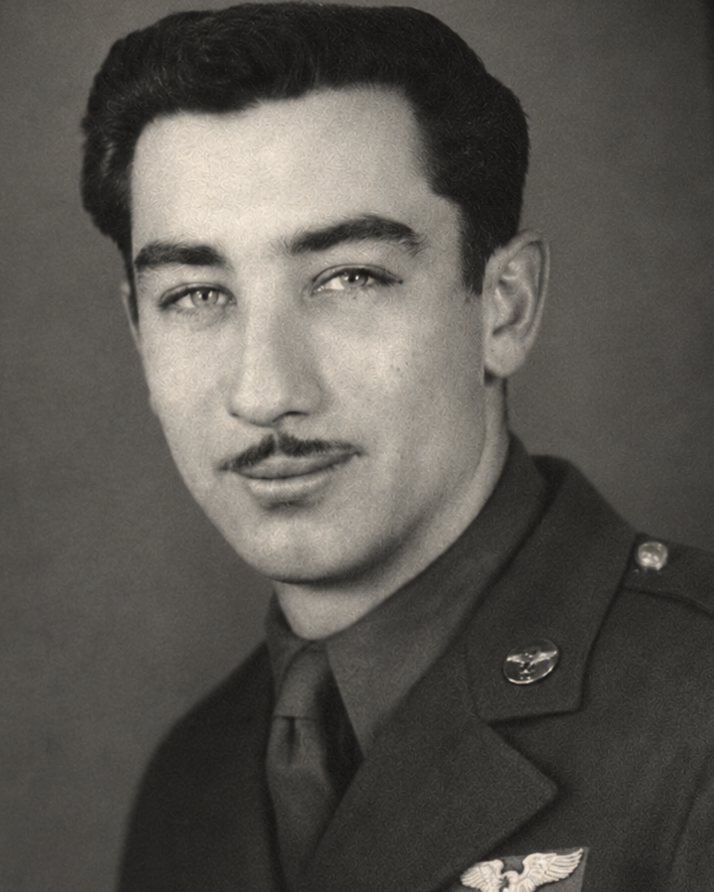
William L. Orient.

Radio Operator · 328th Squadron · Of Bridgeville, PA.

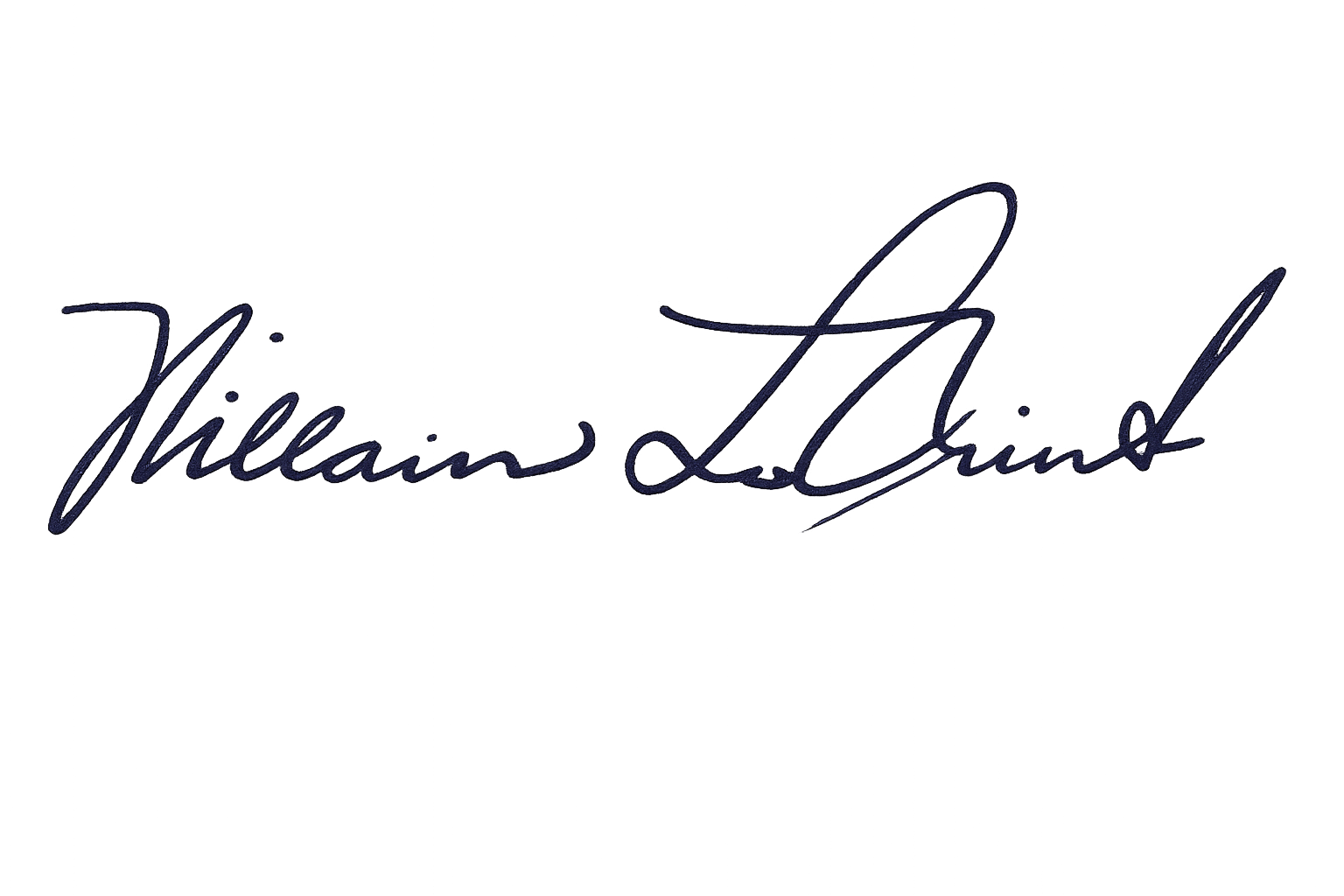
Signature of William L. Orient
William L. Orient
Serial No. 13111662

The man.

§ Biography

William L. Orient, Technical Sergeant, serial number 13111662, served as a radio operator with the 328th Bomb Squadron of the 93rd Bombardment Group (Heavy) — the pioneering B-24 Liberator unit of the U.S. Eighth Army Air Force, operating from Station 104 at Hardwick, Norfolk. A native of Bridgeville, Pennsylvania, he enlisted in April 1942 and ultimately flew 34 combat missions, accumulating more than 200 combat hours. He was one of the most seasoned enlisted airmen in his squadron, voluntarily extending his tour well past the mandatory threshold to remain close to his brother Joe, who was still fighting with the U.S. Army infantry in France.

Orient came to the 93rd the long way. He entered the Army Air Forces hoping to become a pilot, but during primary flight training in a PT-13 biplane, a personality clash with his instructor ended badly — a botched landing in which they hit the ground and clipped a wingtip washed him out of the program. He later concluded he was better suited to the crew than the cockpit. Retrained as a radio operator, he received his B-24 assignment at Davis-Monthan Army Air Field in Tucson, Arizona, where Crew 4436 formed on June 7, 1944. The crew trained under pilot Lt. William McCabe ("Mac"), co-pilot Frank Cepl, navigator Jerry Farnum, bombardier Philip Phillips, and engineer Paul Harwood, alongside gunners Lawrence Miller, Kenneth Holt, Lawrence Coffman, and Henry Bratyanski.

It was in Tucson that Orient met Phyllis — the woman he would marry — just six weeks before the crew shipped out to England. He wrote to her throughout his deployment in letters he could not fill with specifics about his location or assignments, but which traced the arc of his emotional life overseas. He worried about his three brothers and a brother-in-law all serving simultaneously, grieved the loss of his cousin Andy in Italy, and found comfort in small things: a bicycle he called his "wheel," a bush mustache grown to cushion his face against the oxygen mask, and the Friday afternoon parties his barracks crew organized back at Hardwick with parachute bags full of cognac liberated from Antwerp.

Crew 4436 flew their first combat mission on August 1, 1944, bombing Le Bourget Aerodrome near Paris through rough, accurate flak. Three more missions followed in the next four days — a railroad bridge at Montereau, a synthetic ammonia plant at Harnes, and the Heinkel bomber assembly plant at Rostock. On August 5, returning from the aircraft works at Fallersleben near Brunswick, their B-24 absorbed 62 flak hits and lost hydraulics. Orient's crew put down at RAF Woodridge, a five-mile emergency landing strip, dragging the plane's tail on the pavement to stop. The aircraft was repaired and back in the air within weeks — Orient later cited it as evidence of the extraordinary dedication of the ground crews who worked nights by spotlight, changing engines on scaffolds.

The mission of August 8, 1944 — targeting Villacoublay Aerodrome southwest of Paris — became the defining episode of the crew's early service. Under relentless and accurate flak, pilot McCabe took a hit in his hand and began spraying blood. As radio operator, Orient had freedom to move around the flight deck, and he reacted immediately: he reached across the cockpit, lifted McCabe bodily over the control panel, and laid him on the floor. Co-pilot Cepl called bombardier Phillips forward and a tourniquet was applied. Approaching Hardwick on fumes with a wounded pilot aboard, Cepl called for a fly-through landing, shooting red flares so medics could find them on the runway. When Mac was removed from the aircraft, the crew found he had also been wounded in the back. Ground crews later recovered a chunk of flak from inside Orient's radio receiver that would have struck him in the head had he been in his usual seated position.

After McCabe's hospitalization, Crew 4436 flew with Lt. James H. Cook before co-pilot Frank Cepl assumed the pilot's seat. Through late summer the group was pulled off bombing to ferry fuel in 55-gallon drums to General Patton's Third Army at Orleans — the tanks were running dry. When Orient reached 25 missions the Army Air Forces raised the threshold to 30; when he reached 30, they raised it to 35. Most of his original crew went home around their 28th mission. Orient stayed on, assigned as a squadron radio operator flying with whatever crew needed him. His reasons were personal as much as professional: his brother Joe was still in the infantry in France, and staying in the air kept him, in some way, in that fight.

On October 7, 1944, Cook's final mission sent the group to the Magdeburg oil refinery — an installation Orient would visit six times in all. Assigned a brand-new aircraft and a theoretically safe formation position, they were badly mauled by flak and ran out of airspeed and altitude before reaching Brussels. They put down on a captured Luftwaffe field near Antwerp, rolling through cow pastures to stop. A Belgian civilian appeared quickly, warned them Germans were still in the area, and drove the crew into the liberated city. They spent three days at the fine Century Hotel with almost nothing to eat or drink. A Polish RAF squadron offered boiled cabbage and rum; Orient poured the rum into his cigarette lighter and called it the hottest lighter in the squadron. The crew left with parachute bags full of French cognac, which they organized into Friday afternoon parties back at Hardwick.

The mission of January 8, 1945 came closest to ending everything. Launched in near-zero visibility with orders to form over the Bay of Biscay, they were caught in violent thermals that threw the B-24 inverted and spinning. Orient jettisoned the bombs, hit the throttles, and deployed the flaps — but Cepl had gone deep into vertigo. Orient struck him on the shoulder. No response. He wound up for a second blow, ready to haul him from the seat. The second hit brought Cepl back; they pulled out at 1,500 feet with the rear fuselage twisted 45 degrees and the upper stabilizer knocked askew. They put down at Woodridge again. The RAF offered rum. Orient went through the line twice. Back at Hardwick, Cepl climbed off the truck flat on his back, declared he was finished with B-24s, and kept his word — he went home by boat.

Orient flew his remaining missions with borrowed crews — Severson's, Smith's, Holt's — primarily against Magdeburg's synthetic oil plant, which the Germans kept rebuilding as fast as the Allies bombed it. On his final mission, March 3, 1945, he flew as nose gunner with Holt's crew, the third plane to lead the group. They dove to 10,000 feet over Magdeburg; six German jets made passes and put six holes in the plane. He recorded it in his memoir, "Lest We Forget," written in the 1960s: "I quit combat flying at 34 missions — so I could stay with the group." He flew home with the 93rd on a 30-day rest leave, then was sent to Pyote, Texas for B-29 training before the atomic bombs ended the war.

After discharge at Fort Bliss, Texas, Orient boarded a bus overnight to Tucson. He arrived September 13, 1945 — and spent the day waiting. He refused to propose until the 14th. On bended knee, he asked Phyllis to marry him; her only question was "when." They married September 24, 1945 at All Saints Church in Tucson, Father Gramer officiating. They had five daughters and built their lives there; Orient worked as a general contractor for 40 years. He documented his service in "Lest We Forget" and in an oral history recorded by his grandson Jon Edmiston in 2001. He remained grateful throughout his life for the ground crews, the bonds formed under fire, and the strange grace of having survived things he had no right to survive. His marriage to Phyllis lasted 66 years. William L. Orient died on April 29, 2011 — his 90th birthday.

From the 2nd Air Division Association Yearbook

Assigned to 93rd Bomb Group in England as radio operator/gunner on a B-24. After going through three pilots and "walking home" four times, his crew was broken up at 28 missions. He finished the next six as extra crew and replacements, completing 34 total missions.
Service record.

§ As Catalogued
Rank
Technical Sergeant
Position
Radio Operator
Serial Number
13111662
Hometown
Bridgeville, PA

Missions flown.

39 catalogued · newest first
Date
Target
Aircraft
№ 508
01 Aug 1944
Chartres
A/F
“Reddy Teddy”
№ 510
02 Aug 1944
Mantereau
R/B
“Reddy Teddy”
№ 513
03 Aug 1944
Harnes
O/R
“Reddy Teddy”
№ 514
04 Aug 1944
Rostock
A/I
“Ma's Worry”
№ 519
05 Aug 1944
Brunswick Aero-Eng
??
42-95147
№ 527
07 Aug 1944
Paris
“U.S. Express, The”
№ 530
08 Aug 1944
Bretigny
A/F
“Willie's Worry”
№ 541
11 Aug 1944
Paris
“Fart Sack Time / Little Orphan Annie II”
№ 545
12 Aug 1944
Laon/Athies
A/F
“Miss America”
№ 548
13 Aug 1944
Le Manoir Bridge
R/B
“Miss America”
№ 554
15 Aug 1944
Wittmundhafen
A/F
“What A Sack”
№ 619
10 Sep 1944
Heilbronn
M/Y
“Ma's Worry”
№ 623
11 Sep 1944
Magdeburg
O/I
XX-XX451
№ 628
13 Sep 1944
Ulm
M/D
42-50606
№ 647
25 Sep 1944
Koblenz/Mosel
M/Y
“Beaver's Baby”
№ 648
26 Sep 1944
Hamm M/Y
M/Y
“Fart Sack Time / Little Orphan Annie II”
№ 652
28 Sep 1944
Kassel/Henschel
MT/I
“Fart Sack Time / Little Orphan Annie II”
№ 659
02 Oct 1944
Hamm
M/Y
“Fart Sack Time / Little Orphan Annie II”
№ 669
07 Oct 1944
Magdeburg/Bückau
O/I
42-50594
№ 681
17 Oct 1944
Cologne/Gereon
M/Y
№ 688
25 Oct 1944
Neumunster
A/F
“Fart Sack Time / Little Orphan Annie II”
№ 693
30 Oct 1944
Hamburg/Harburg
O/R
№ 700
04 Nov 1944
Hannover/Misburg
O/I
№ 702
05 Nov 1944
Karlsruhe
M/Y
№ 705
08 Nov 1944
Rheine
M/Y
“Fart Sack Time / Little Orphan Annie II”
№ 720
21 Nov 1944
Hamburg/Dpag
??
“Night Knight”
№ 723
25 Nov 1944
Bingen
M/Y
“Beaver's Baby”
№ 729
29 Nov 1944
Bielefeld/Schildesche
R/V
“Unexpected Visitor, The”
№ 212
30 Nov 1944
Neunkirchen
M/Y
“Fart Sack Time / Little Orphan Annie II”
№ 734
02 Dec 1944
Bingen M/Y
M/Y
“Ma's Worry”
№ 736
04 Dec 1944
Koblenz
M/Y
“Unexpected Visitor, The”
№ 760
24 Dec 1944
Target of Opportunity
??
“Sleepy Time Gal”
№ 761
25 Dec 1944
Hallschlag
C/C
“Fart Sack Time / Little Orphan Annie II”
№ 769
29 Dec 1944
Duppach
??
“Sleepy Time Gal”
№ 783
06 Jan 1945
Koblenz/Mosel M/Y
M/Y
“Fart Sack Time / Little Orphan Annie II”
№ 787
08 Jan 1945
Tactical target (aborted before reaching target)
42-50594
№ 821
06 Feb 1945
Magdeburg
M/Y
41-29456
№ 859
02 Mar 1945
Magdeburg/Rothensee O/I
O/I
42-50594
№ 861
03 Mar 1945
Magdeburg/Rothensee O/R
O/R
42-95147

Before and after.

§ The Civilian Years
Before the War

Born April 29, 1921 in the Pittsburgh, PA area. Enlisted as aviation cadet; classified at Nashville. Pre-flight at Santa Ana; primary flight training at Santa Maria (washed out of pilot training). Radio School at Sioux Falls, SD; Gunnery at Yuma, AZ; operational training at Davis Monthan, Tucson, AZ.

After the War

After completing 34 missions (28 with crew + 6 as extra/replacement), flew home with 93rd Bomb Group. After R&R, assigned back to Sioux Falls with the 8th Air Force. On V-J Day sent to Pyote, TX for B-29 training. Discharged at Fort Bliss; rode the bus to Tucson and married the girl he had met while stationed there. Four daughters, seven grandchildren. General contractor for about 40 years in Tucson, AZ.

In his own words.

§ Contributed Material
Recorded Interview

Out of Airspeed Over Antwerp

Jon Edmiston

On their last mission with pilot Cook, a badly damaged plane and lost airspeed forced the crew to put down on a captured Luftwaffe field outside Antwerp. A Belgian civilian found them first, warned them Germans were still in the area, and drove them into the liberated city.

Recorded Interview

Six Weeks and a War Away

Jon Edmiston

William Orient enlisted in April 1942, met Phyllis during B-24 training at Davis-Monthan — six weeks before he shipped out. Assigned to the 93rd Bomb Group's "Ted's Traveling Circus," he flew combat across North Africa and Europe, including a punishing nine-hour oxygen mission to Stettin, Poland.

Recorded Interview

125 Points

Jeff Stensrud

With 125 points against the 85 needed for discharge, William Orient was among the first to qualify when the war ended. He flew home with the 93rd Bomb Group, rendezvoused with the Eighth Air Force in Salt Lake City, collected his discharge papers, and rode the bus to Tucson that same night.

Recorded Interview

Mac's Hand

Jeff Stensrud

When pilot Mac was shot mid-mission, William Orient reached across the cockpit, lifted the large man bodily over the control panel, and laid him on the floor. Bombardier Phil was called up, a tourniquet applied, and Mac survived. Phil later said the luckiest day for the crew was the day Orient joined — a late assignment just before they left Tucson.

Recorded Interview

The Shade Tree and the Empire State Building

Jon Edmiston

A colonel at Salt Lake City sought out William Orient by reputation to serve as radio operator on a flight east. Orient was under a shade tree sharing a bottle and never answered the call. The plane was the B-25 that crashed into the Empire State Building in 1945 — and his high school date Rosemary Welch was on the other side of the building when it hit.

Recorded Interview

First Yankee in Paris

Jon Edmiston

Shortly after de Gaulle's forces liberated Paris, William Orient crewed two wing colonels over from England. Given a few hours free, he and the crew toured the city — but the Germans had looted it clean. The only souvenir he could find was a small poodle lapel pin.

Recorded Interview

N-Nan and the 42 Holes

Jon Edmiston

The crew's assigned plane — "N-Nan" — came back from one mission with 42 fist-sized holes and was back in the air within weeks, ground crews working nights under spotlights. On another mission, with pilot Mac shot and the plane low on fuel, Orient shot red flares on approach so medics could find them on landing. A chunk of flak pulled from his radio receiver afterward would have hit him in the head had he been sitting in his usual position.

Recorded Interview

The Two-Rum Landing

Jon Edmiston

On their 28th mission, violent wind drafts threw the B-24 inverted and spinning. Orient jettisoned the bombs, hit all four throttles, and struck the vertigo-stricken copilot Frank Semple hard on the shoulder to bring him back. They put down at Woodridge, where Orient went through the RAF rum line twice. Semple climbed off the plane, declared he would never fly again, and kept his word.

Recorded Interview

Rooftop Level

Jon Edmiston

As the war wound down, the 93rd flew trolley missions — low-level runs over France and Germany carrying ground personnel who'd never seen the destruction from the air. Flying over Antwerp at rooftop level, Orient could look down into the basement of the hotel where his crew had once stayed and see the chairs in the movie theater. The Battle of the Bulge had been made possible by a week of solid overcast that grounded every Allied aircraft — giving the Germans the cover they needed to launch thei

Recorded Interview

Almost a Gunfight in the Barracks

Jon Edmiston

A young crewman — his name mangled by Murray Muscatel until a postwar reunion set it right — was cleaning his .45 the night before a weapons inspection, reassembled it, and pulled the trigger out of habit. The round passed over William Orient's head and punched a hole in the metal barracks wall. He hit the floor and drew his own weapon before George McNulty came running to convince him it had been an accident. On the bomb run, Orient's job was to keep his foot on the lever holding the bomb bay d

Recorded Interview

All Bombs Away

Jeff Stensrud

As radio operator, William Orient was largely footloose during the flight — his job on the bomb run was to stand at the bomb bay doors, holding them open with his foot and sitting on his flak vest against flak coming up from below. On one mission a bomb hung on its shackle after release, already armed — impossible to land with. Orient strapped on a walk-around oxygen bottle, grabbed a screwdriver, and made his way out into the open bomb bay at altitude. One well-placed strike knocked it loose. H

Recorded Interview

Accidental Copilot

Jon Edmiston

When pilot Cook called a routine local flight and neither the engineer nor copilot showed up, William Orient climbed into the copilot seat. He started the engines, called off the takeoff checklist, and after reaching altitude synchronized all four propellers by watching their shadow patterns through the side windows and working the toggle switches until they ran smooth. He figured the more he knew about the B-24, the better off he and the crew would be.

Recorded Interview

The California Dandy

Jon Edmiston

During primary flight training in a PT-13 biplane, William Orient was assigned an instructor he described as a California dandy — short, curly-haired, scarf at the neck, flying boots. There was an immediate personality clash. On one approach the instructor never communicated that Orient was supposed to be landing; they hit the ground, swerved, and clipped a wingtip. He was washed out of pilot training. In later years he concluded he'd been better off — a B-24 crew suited him far more than sittin

Recorded Interview

The Bonds That Don't Break

Jon Edmiston

Combat flying forged a kinship William Orient said could never be created any other way. He found crewmates after the war through reunions and chance — Semple in a Los Angeles phone book, Farnham in Boston, engineer Paul Harwood still in regular contact decades later. Not every reunion was sentimental: word came back through the reunion circuit that Murray Muscatel, the barracks hustler who ran dice games in the officers' day room and left England with a barracks bag full of British pound notes,

Recorded Interview

The Back Seat of a Ford Convertible

Jeff Stensrud

News of Pearl Harbor reached William Orient in the back seat of a Ford convertible, on a double date with his cousin Louise and her boyfriend. Disbelief was the first reaction — nobody in the car could say for certain where Pearl Harbor even was, or believe that Japan would dare strike the United States directly. It would be four more months before he enlisted.

Recorded Interview

Footloose and Fancy-Free

Jeff Stensrud

Orient waited nearly four months after Pearl Harbor to enlist, timing it to turn 21 and knowing the draft would catch him regardless. Enlisting meant a choice of assignment instead of the draft's coin flip. Meanwhile his brothers were already scattering across the war in four different directions — one repairing aircraft island to island, one exempted as the family breadwinner, one drafted the day after high school graduation, and the youngest bound for Korea years later.

Recorded Interview

Gas, Colonels, and a Toy Poodle

Jeff Stensrud

When Patton's tanks outran their own supply lines across France, Orient's group became truckers — stripping their B-24s down to a skeleton crew and flying fuel and cargo directly into Orleans at low level. The same freedom to move brought him to newly liberated Paris as one of the first American servicemen in the city, and later to the low-level "trolley" runs down the Rhine, where he watched British fighters tip V-1 flying bombs off course with their wingtips.

Recorded Interview

More Credit to the Captured

Jeff Stensrud

Shot down early in his tour and captured, fellow airman Tom Bent spent years in a German POW camp with badly injured knees, later forced on a march ahead of the advancing Russian lines. Orient's account of Bent's ordeal opens into a wider reflection — on the resentment some veterans felt watching POWs receive more recognition than crews who flew dozens of missions and made it home, and on the military's deliberate policy, after the Sullivan brothers' deaths, of keeping friends and family separat

Recorded Interview

One Notch Too Far

Jeff Stensrud

Briefed to hit German positions still holed up at Metz late in the war, Orient's crew crossed their own initial point in friendly territory — and a bombardier's one-notch error sent three blockbusters down on Allied-held ground before the bay doors ever reached enemy lines. The story sits alongside Orient's broader observations on the failed Maginot Line, the decline of Stuka dive-bombing against high-altitude Allied tactics, and the flak that had, by then, become more dangerous than German figh

Recorded Interview

Scotch in the Garden Wall

Jeff Stensrud

An overnight pass turned into an all-night dash to Edinburgh with navigator John Sloan, whose Uncle Allen produced hidden bottles of scotch along a garden path and sent the two servicemen off with canteens refilled for the road. Orient hauled a hopelessly drunk Sloan back to base on his shoulder — only for a recall flare to scrub the mission an hour later, sparing them both a miserable flight.

Recorded Interview

Barrel to Barrel

Jeff Stensrud

With Magdeburg's synthetic oil plant hit six times and rebuilt just as fast by German construction crews working around the clock, one mission broke from the usual high-altitude approach — diving the formation down to 10,000 feet to make sure the bombs actually landed. Orient's account also covers the H2X radar and G-box systems that let the lead squadron bomb blind through solid cloud cover, and his sober tally of the flak defenses ringing German cities: enough guns around Hamburg alone, by his

Recorded Interview

Never Bombed Again

Jeff Stensrud

A nine-hour mission at altitude, out over the North Sea and the Baltic to bomb Stettin, Poland, and back — a target hit so thoroughly on the first pass that, by Orient's account, it was never bombed again by air. The Germans eventually built reinforced submarine pens in the ruins so heavily fortified that British forces had to go after them with torpedoes instead.

Recorded Interview

Thirty-Four on Paper, Thirty-Seven in the Book

Jeff Stensrud

Orient's official record credits him with 34 combat missions — one short of the 35 that would have forced a second tour, and exactly where he chose to stop. His personal logbook tells a different story: 37 missions, the extra three flown as a last-minute substitute on other crews and never logged by ground personnel too rushed to record fill-ins. He still hopes, decades later, that the discrepancy might someday be acknowledged — though he concedes much of the paperwork that could prove it burned

Recorded Interview

Eyeball to Eyeball

Jeff Stensrud

Opening the bomb bay doors mid-mission, Orient found a German ME-109 tucked directly beneath the formation, in the blind spot left by the ball turrets the group had stripped out to save weight. Close enough to see the pilot's face, he worked his .45 free of his parachute harness — and the instant the German saw the pistol come up, he peeled off in a straight black streak for the ground. This is the audio record of the same incident behind the site's "The Wrench and the ME-109" story, told here i

Documents.

5 on file

Photographs.

8 on file