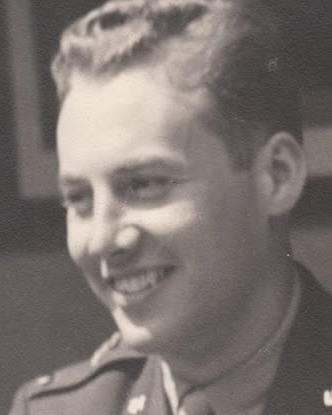
Crew Roster · Personal File
Edward C. Miller
Serial No. O-806491

Edward C. Miller

Co-Pilot · 328th Squadron
Hometown8705 Ridge Boulevard, New York, New York

2nd Lt. Edward C. Miller served as co-pilot aboard B-24 serial 42-7519, 328th Bomb Squadron, 93rd Bomb Group. He was declared missing in action on 7 January 1944 after the aircraft was lost on a mission to Ludwigshafen.

Miller bailed out at approximately 13,000 feet at around 1330 hours, between Paris and Melun. He evaded capture and returned to duty (RD). He was the source for E&E Report #693, dated 30 May 1944, in which he described the aircraft's condition at bailout: No. 3 engine on fire, Nos. 2 and 4 feathered, No. 1 out of control.

Miller reported personally checking the entire front of the airplane before bailing out and finding it empty. He saw the radio operator and top turret gunner bail out. French helpers on the ground told him that seven parachutes had been counted. He heard from helpers that German ground troops had fired on some crew members.

His next of kin was his father, Melville W. Miller, of 8705 Ridge Boulevard, New York, New York.

Sortie Log

3 CATALOGUED SORTIES
07 JAN 1944 — 07 JAN 1944

The sorties below are those we have been able to document for this airman, drawn from flight logs, mission records, and archival sources. It is not necessarily a complete account of every mission flown; gaps may reflect missing documentation, transferred assignments, or records lost to time.

8AF Mission
Date
Target
Aircraft
№ 178
07 JAN 1944
Ludwigshafen
On 7 January 1944, the aircraft was on a mission to Ludwigshafen. The crew flew through thick clouds from Paris onward. Just before reaching the target area, a JU 188 made a pass at the formation and the waist gunner fired a burst at it. Flak was fairly heavy. The aircraft was hit by flak before dropping its bombs, with holes observed in the right wing and damage to the cowling of No. 4 engine (oil smoke pouring from a holed oil line). The crew bombed the target with the formation and started back. No. 2 engine then began to fail and was feathered, causing the aircraft to lose altitude and speed. After 20 more minutes on three engines they fell behind their group, and attempted to join another B-17 formation but could not maintain speed. No. 4 engine also failed. With No. 3 supercharger also out, the aircraft was reduced to two engines and descended to 8,000 feet. Coming out of the clouds, the crew observed the Fontainebleau Forest below. They threw out all available equipment but could not regain altitude. Flak began bursting to the right of the plane, and the interphone went out. A fragment of flak went through the fuselage behind the waist windows, after which the radio operator ordered the crew to bail out at approximately 1420. The aircraft went into a spin to the left as the last crew members were jumping. The bail-out occurred at approximately 4,000 feet altitude, approximately 47 km south of Paris near St. Sauveur, southwest of Melun.
№ 178
07 JAN 1944
Ludwigshafen
B-24 serial number 42-7519, nicknamed "519-D," was assigned to the 328th Bomb Squadron, 93rd Bomb Group. On 7 January 1944, the aircraft departed AAF 104 on a combat mission to Ludwigshafen, Germany. During the mission, the aircraft was attacked by enemy fighters. No. 3 engine caught fire, Nos. 2 and 4 were feathered, and No. 1 went out of control. Co-pilot 2nd Lt. Edward C. Miller reported bailing out at approximately 13,000 feet, at around 1330 hours, between Paris and Melun (near St. Assisse). A cipher message received after the loss stated that an aircraft of the 93rd Bombardment Group, 328th Bombardment Squadron had landed in Switzerland. The intelligence officer's eyewitness report notes this was likely 42-7519, though confirmation was pending at the time of the report. Seven parachutes were counted by French helpers on the ground. Hearsay information from French sources indicated that crew members Stearns, Varbese, and Wahrheit were believed killed, while Carnahan and Long were captured. Miller also reported hearing that ground troops had fired on some men after bailout.
42-7519
№ 178
07 JAN 1944
Ludwigshafen
Aircraft departed Hardwick at approximately 0700 on 7 January 1944 to bomb Ludwigshafen. The crew flew in thick clouds from Paris onward. The aircraft was struck by flak before bombs were dropped, sustaining damage to the right wing and the cowling of engine No. 4. The formation bombed the target despite the damage. After leaving the target, engine No. 2 began to fail and was feathered. The aircraft lost altitude and speed, dropped behind the formation, and could not keep up with a second group of B-17s. Engine No. 4 then also failed. At 8,000 feet, a flak fragment penetrated the fuselage behind the waist windows and the crew was ordered to bail out. The aircraft went into a spin as the last crew members bailed out at approximately 4,000 feet. The aircraft came down approximately 47 km south of Paris near Fontainebleau Forest.