Supports 2 facts
E&E Report No. 47 - Sgt. Arthur B. Cox, Jr.
Military Record · July 1943 · Escape and Evasion Reports
Cited at pp. 1, 2
Radio Operator · Of Corliss, Pittsburgh, PA.
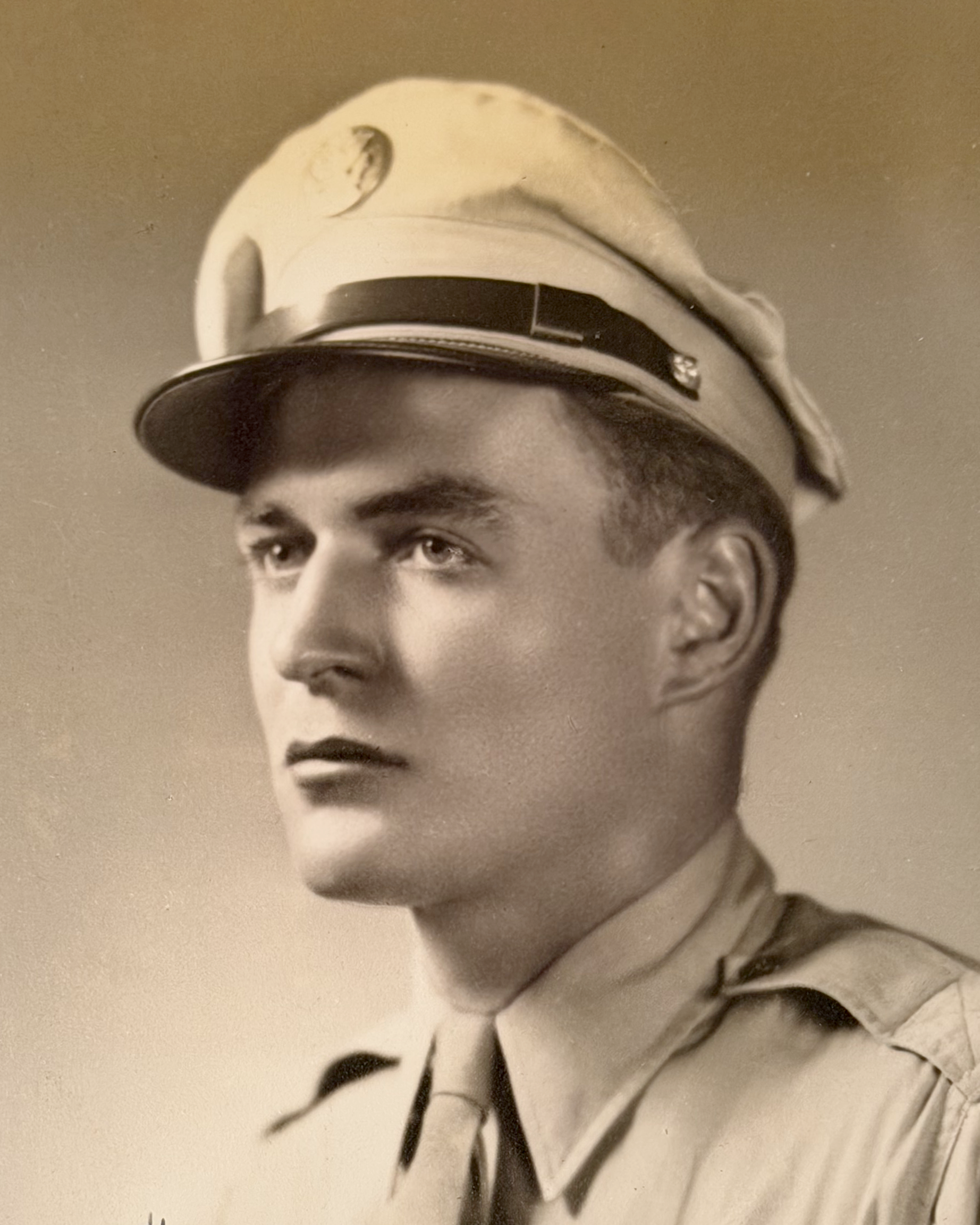
Michael L. Reardon tried to enlist in February 1941, but was turned down by the Army, Navy, and Marines because of poor eyesight. He joined the National Guard instead, and a week later the Guard was incorporated into the Regular Army, making him a soldier. He had quit school in his junior year at Coraopolis High School to join up.
Reardon was assigned to the artillery, but wanted to fly. He petitioned his commanding officers for a transfer to the Air Forces until it was granted, and trained as a radio operator and turret gunner. He was home on furlough in August 1942, then went to England that same month, joining the 93rd Bomb Group as part of the crew of "Big Eagle," a B-24 flown by Capt. Alexander Simpson and known within the group as one of "Ted's Traveling Circus."
Reardon's own diary describes the crossing to England in early September 1942, by way of Newfoundland and Prestwick, Scotland, before the crew reached their base above London. He shared a hut with 29 other men, and describes a close friendship with tail gunner Stephen "Epp" Eppolito, with whom he visited Cambridge in the weeks before the crew's first mission. He was made a Technical Sergeant on September 30, 1942, and two scheduled missions in early October were scrubbed after the bombs had already been loaded aboard the aircraft.
On October 6, 1942, the crew flew a rough practice formation flight, at one point within five feet of a neighboring aircraft. Three days later, on October 9, the 93rd Bomb Group flew its first combat mission, targeting the rail yards and factories at Lille. Reardon's diary recounts FW-190 fighters attacking the formation as soon as it crossed into France, followed by a hit that set the flight deck ablaze with orange flame and the smell of cordite; the co-pilot's feet caught fire as the pilot, Capt. Alexander Simpson, throttled back, salvoed the bombs, and rang the bail-out bell. Reardon jumped feet-first through the bomb bay and opened his chute at roughly 20,000 feet; Big Eagle went down near Dunkirk, the group's first combat loss. (Reardon's own account describes the flight-deck fire without naming the engine; a separate account instead attributes the loss to the number two engine catching fire, and another to the number four engine with fire breaking out in the bomb bay - see researcher notes.) After a hard landing, he was hidden and fed black bread by two French wood-cutters, then spent three days on foot heading south before being captured on October 12, 1942, his nineteenth birthday, when French police in a small village turned him over to the Germans. Four days after the mission, the War Department wired his family that he was missing in action. An official letter dated October 31, 1942 told them he was a German prisoner, interned first at Camp Dulag Luft and later at Stalag XVII-B.
As a POW, Reardon found a close friend in fellow prisoner Colin N. Jones, whose bunk was assigned near his own. The two shared a food combine with fellow prisoner Francis Counseman and passed the time playing bridge.
He spent 31 months as a prisoner of war in Germany without pay. Letters his family wrote to him at the internment camp were returned undelivered, though a Christmas package of warm clothing they sent was hoped to get through.
Following liberation, Reardon was reunited with Jones at Camp Lucky Strike in France, and the two later slipped away together on an unauthorized side trip to Belfast and elsewhere in Ireland before shipping home. Reardon returned to the United States on July 1, 1945. He was processed at the Indiantown Gap Reception Station, received a 60-day furlough home to Pittsburgh, and collected $6700 in back pay accumulated during his captivity.
That July, Reardon was reunited with his fiancee Betty ("Bebe"), who wrote a section of his diary herself while he was home on furlough; the two were later married.
The missions below are those we have been able to document for this airman, drawn from flight logs, mission records, and archival sources. It is not necessarily a complete account of every mission flown; gaps may reflect missing documentation, transferred assignments, or records lost to time.
Original documents behind what this page says about this airman — reports, records, and histories the archive holds and is free to reproduce. Check the sources for yourself.